


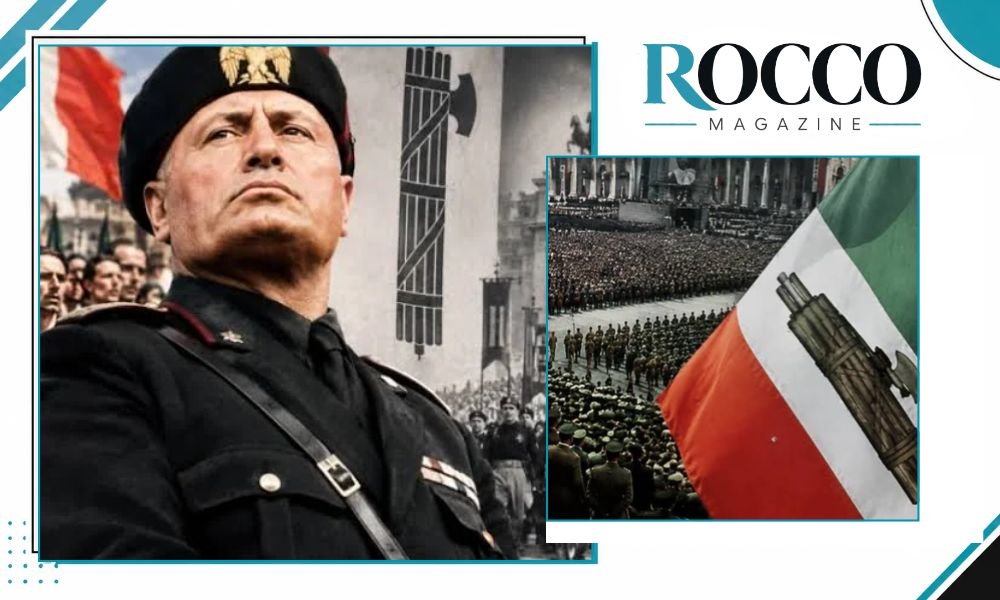
Fascisterne is a Danish word that means “the fascists” in English. It describes people associated with fascism, a political ideology that became influential in Europe during the early twentieth century. The word appears in Danish history books, political discussions, newspapers, and educational materials.
Understanding Fascisterne involves more than learning a simple translation. The term connects to important historical events, including the rise of Benito Mussolini in Italy, the development of Nazi Germany, and the emergence of extremist political movements in Denmark.
Fascism influenced European politics during a period of economic difficulties, political instability, and growing nationalism.
Its supporters promoted powerful leadership, extreme national unity, and the rejection of liberal democratic institutions.
However, the word Fascisterne does not identify one particular political organization. It can describe different groups depending on the historical context.
This complete guide explains the meaning, origins, historical background, characteristics, and lasting importance of Fascisterne through nine essential facts.
Fascisterne Quick Overview
| Topic | Information |
|---|---|
| Keyword | Fascisterne |
| Language | Danish |
| English Translation | The fascists |
| Singular Form | Fascist |
| Indefinite Plural | Fascister |
| Definite Plural | Fascisterne |
| Related Ideology | Fascism |
| Danish Word for Fascism | Fascisme |
| Historical Origins | Early twentieth-century Europe |
| Important Historical Figure | Benito Mussolini |
| Major Historical Period | 1919–1945 |
| Danish Historical Connection | Fascist and National Socialist movements |
| Political Characteristics | Authoritarianism and ultranationalism |
| Modern Usage | History, journalism, and political discussion |
1. What Does Fascisterne Mean?
Fascisterne translates directly into English as “the fascists.”
It is the definite plural form of the Danish noun “fascist.”
In simple language, the word describes a particular group of people identified as supporters of fascism.
The term is commonly used when discussing historical political movements.
For example, a Danish history book about Italy might use Fascisterne when describing Mussolini’s followers.
A different article about Denmark during World War II might use the same word when discussing Danish fascist activists.
The surrounding information determines which group is being described.
Is Fascisterne a Political Party?
No. Fascisterne is not the official name of one particular political party.
It is an ordinary Danish noun.
Different political organizations have existed within the broader history of fascism.
Some were based in Italy, while others developed in Germany, Denmark, and other European countries.
Using Fascisterne does not automatically identify any one of them.
Why Is the Meaning Important?
Understanding the correct meaning prevents historical confusion.
If someone mistakes Fascisterne for the name of a specific Danish organization, they may misunderstand the original text.
Accurate translation helps readers understand what historians and journalists are actually describing.
2. The Danish Language Origins of Fascisterne
The structure of Fascisterne reflects an important feature of Danish grammar.
In English, people normally place “the” before a noun to identify something specific.
Danish often adds an ending to the noun instead.
This is why the word changes from “fascister” to “fascisterne.”
Danish Word Forms
| Danish Word | English Meaning |
|---|---|
| Fascist | A fascist |
| Fascisten | The fascist |
| Fascister | Fascists |
| Fascisterne | The fascists |
| Fascisme | Fascism |
| Fascistisk | Fascist, as an adjective |
The ending “-erne” marks the definite plural form.
This grammatical feature is common in Danish.
Fascisterne vs Fascisme
These two words are related but have different meanings.
Fascisterne refers to people.
Fascisme refers to the political ideology itself.
For example, someone studying fascisme is studying the ideas and political systems associated with fascism.
Someone discussing fascisterne is discussing people identified with those ideas.
This distinction is important in historical research.
3. Where Did Fascism Begin?
To understand Fascisterne, it is helpful to explore the history of fascism.
Modern fascism emerged as an organized political movement in Italy following World War I.
The war had caused enormous human suffering, economic difficulties, and political instability across Europe.
Many people were frustrated with traditional political institutions.
During this period, Benito Mussolini began building a movement that promised national strength, political order, and a powerful government.
Benito Mussolini and Italian Fascism
Mussolini established the Fasci Italiani di Combattimento in 1919.
His movement later developed into the National Fascist Party.
Supporters promoted extreme nationalism and strong centralized political leadership.
They also used intimidation and organized violence against political opponents.
In October 1922, Mussolini came to power following the March on Rome.
Italy subsequently became a dictatorship.
Why Did Fascism Gain Support?
Several historical conditions contributed to the movement’s rise.
Economic uncertainty created fear about employment and financial security.
Political disagreements weakened confidence in established institutions.
Nationalist messages appealed to people who believed their country had been treated unfairly.
Fascist leaders used these concerns to build political support.
However, the movement’s promises of national renewal came alongside restrictions on political freedom and the suppression of opposition.
4. What Did Fascisterne Believe?
Historical fascist movements differed between countries, but many shared recognizable characteristics.
These included extreme nationalism, authoritarian leadership, hostility toward liberal democracy, and the use of political violence.
Extreme Nationalism
Fascist movements placed the nation at the center of political life.
They often promoted the idea that national interests should take priority over individual rights.
This approach could encourage discrimination against people viewed as outsiders.
Authoritarian Leadership
Fascist systems emphasized powerful leaders.
Political decisions became concentrated within a small leadership structure.
Opposition parties and independent institutions were frequently restricted or eliminated.
Rejection of Liberal Democracy
Fascist leaders often criticized parliamentary democracy.
They argued that political competition weakened national unity.
Once in power, fascist governments worked to remove checks on their authority.
Political Violence
Historical fascist organizations used violence and intimidation to weaken opponents.
Paramilitary groups played an important role in several movements.
These tactics damaged democratic institutions and created fear.
Propaganda and Mass Mobilization
Fascist movements used speeches, posters, rallies, and controlled media to influence public opinion.
Propaganda presented leaders as symbols of national strength.
It also encouraged loyalty to the movement while attacking political opponents.
5. Fascisterne and the Rise of Fascism in Denmark
Denmark had its own fascist and National Socialist movements during the 1930s.
However, these organizations never achieved the same level of political power as fascist movements in Italy or Nazi Germany.
Denmark remained a parliamentary democracy before the German occupation in 1940.
Danish National Socialist Workers’ Party
One of Denmark’s best-known extremist organizations was Danmarks Nationalsocialistiske Arbejderparti, commonly called DNSAP.
The party was founded on November 16, 1930.
Its political ideas were strongly influenced by Germany’s Nazi Party.
The organization promoted National Socialist policies and opposed parliamentary democracy.
It also adopted antisemitic ideas and political symbolism associated with German Nazism.
Did DNSAP Control Denmark?
No.
DNSAP never formed the Danish government.
The party remained a relatively small political force.
It won three seats in Denmark’s parliament in the 1939 election.
It again secured three seats in the 1943 election.
These results demonstrate that the organization did not achieve broad electoral support.
Was DNSAP the Same as Fascisterne?
Not exactly.
DNSAP was the official name of a particular Danish National Socialist party.
Fascisterne is a general Danish word meaning “the fascists.”
A historical writer might use the word when discussing members of DNSAP, but the terms are not interchangeable.
6. Fascisterne During World War II
World War II was one of the most important periods in the history of European fascism.
Nazi Germany invaded Denmark on April 9, 1940.
The occupation continued until May 1945.
During this period, Danish society faced difficult political, economic, and moral challenges.
German Occupation of Denmark
Germany occupied Denmark as part of its wider military strategy in Europe.
For the first years of occupation, Danish political institutions continued operating under significant German pressure.
This arrangement became increasingly difficult as the war continued.
In August 1943, cooperation between Danish authorities and the occupying power broke down.
Danish Resistance
Resistance activities developed during the occupation.
Some Danish citizens distributed underground newspapers, gathered intelligence, or participated in sabotage.
Others helped people escape persecution.
Resistance efforts increased as the war progressed.
Rescue of Danish Jews
One of the most significant events occurred in October 1943.
When German authorities moved to arrest Danish Jews, many Danish citizens helped them escape to neutral Sweden.
More than 7,000 Jews were transported to safety.
This rescue became an important example of collective action against Nazi persecution.
However, some people were captured and deported, and the experience remained dangerous for those involved.
End of the Occupation
German occupation of Denmark ended in May 1945.
The defeat of Nazi Germany also marked the collapse of several European fascist and National Socialist regimes.
The war left lasting political and social consequences across the continent.
7. Fascisterne vs Nazisterne: What Is the Difference?
Fascisterne and Nazisterne are two Danish words that may appear together in historical discussions.
Although they are related, they do not have identical meanings.
Fascisterne means “the fascists.”
Nazisterne means “the Nazis.”
Fascism and Nazism
Fascism is a broader political category associated with authoritarian ultranationalist movements.
Nazism was the ideology of Adolf Hitler’s National Socialist movement in Germany.
Historians generally recognize Nazism as a form of fascism, while also identifying its distinctive features.
Nazi ideology placed particular emphasis on racial hierarchy, antisemitism, territorial expansion, and the persecution of groups it considered undesirable.
These beliefs contributed directly to the Holocaust and other mass atrocities.
Comparison Table
| Feature | Fascism | Nazism |
|---|---|---|
| Major Historical Association | Mussolini’s Italy | Hitler’s Germany |
| Political System | Authoritarian dictatorship | Totalitarian dictatorship |
| Nationalism | Central feature | Central feature |
| Liberal Democracy | Rejected | Rejected |
| Political Opposition | Suppressed | Suppressed |
| Racial Ideology | Varied between movements | Central to Nazi doctrine |
| Antisemitism | Present in several movements | Fundamental to Nazi ideology |
| Historical Period | Mainly twentieth century | Especially 1920s–1945 |
Understanding these differences helps students avoid treating every authoritarian movement as identical.
8. How Did Fascisterne Influence European History?
Historical fascist movements had a major impact on European politics.
Their influence extended beyond elections and political speeches.
They changed government institutions, restricted civil liberties, and contributed to international conflict.
Destruction of Democratic Institutions
In several countries, fascist leaders weakened or eliminated democratic institutions.
Independent political parties were suppressed.
Freedom of expression was restricted.
Courts and government agencies increasingly served authoritarian leadership.
Expansion of State Control
Fascist governments attempted to direct many areas of public life.
Education, media, cultural organizations, and economic institutions were influenced by government policies.
Political loyalty became an important requirement in many professions.
Military Expansion
Militarism was a major feature of several fascist movements.
Mussolini’s Italy pursued imperial expansion, including the invasion of Ethiopia in 1935.
Nazi Germany followed an aggressive expansionist policy that helped bring about World War II in Europe.
Human Rights Violations
Fascist and Nazi governments were responsible for severe repression and persecution.
Nazi Germany carried out the Holocaust, murdering six million Jews and persecuting and killing millions of other victims.
Studying these events helps explain the dangers associated with unchecked political power and state-sponsored persecution.
9. Why Is Fascisterne Still Important Today?
The word Fascisterne remains relevant because historians, journalists, and readers continue discussing fascism and its legacy.
It appears in Danish educational materials, historical research, political commentary, and public debates.
However, modern usage requires careful attention to context.
Historical Education
Students encounter Fascisterne when studying European history.
The term helps connect Danish-language sources with broader historical discussions about authoritarian political movements.
Political Discussions
The word may also appear in contemporary political debates.
Sometimes it is used to describe organizations that historians or political analysts identify as fascist.
In other situations, people use it as a political accusation.
These uses should not automatically be treated as equivalent.
Importance of Accurate Language
Political words can carry strong historical meanings.
Calling a person or organization fascist is a serious description that should be supported by relevant evidence.
Historians often examine political ideology, organizational structure, leadership, behavior, and historical context before applying the label.
Accurate language helps people understand political differences without relying on misleading comparisons.
How Fascisterne Is Used in Danish Sentences
Understanding a word becomes easier when readers see it in context.
Here are several simple examples.
Example 1
Danish: Fascisterne kom til magten i Italien.
English: The fascists came to power in Italy.
This sentence refers to a historical political movement.
Example 2
Danish: Historikeren skrev om fascisterne.
English: The historian wrote about the fascists.
The sentence does not identify a specific country.
The surrounding text would explain which group is being discussed.
Example 3
Danish: Fascisterne var imod demokratiet.
English: The fascists were opposed to democracy.
This sentence describes an important characteristic of historical fascist movements.
Example 4
Danish: Bogen undersøger fascisterne i Europa.
English: The book examines the fascists in Europe.
Here, the term refers to people associated with fascist movements across Europe.
These examples demonstrate why translation depends on context.
Fascisterne Historical Timeline
| Year | Historical Event |
|---|---|
| 1919 | Mussolini established the Fasci Italiani di Combattimento |
| 1922 | Mussolini came to power in Italy |
| 1930 | DNSAP was founded in Denmark |
| 1933 | Adolf Hitler became German chancellor |
| 1935 | Fascist Italy invaded Ethiopia |
| 1939 | World War II began in Europe |
| 1940 | Germany occupied Denmark |
| 1943 | Danish Jews were helped to escape to Sweden |
| 1945 | Nazi Germany was defeated and Denmark was liberated |
Common Misunderstandings About Fascisterne
Several misunderstandings appear in online discussions about the word.
One is the belief that Fascisterne was the official name of a Danish political party.
In reality, it is a general noun.
Another misunderstanding is that Fascisterne and fascisme mean exactly the same thing.
One refers to people, while the other refers to an ideology.
Some readers also assume that fascism and Nazism were completely identical.
Although the movements shared important characteristics, their historical development and ideological details differed.
Finally, the word does not always refer to Denmark.
Danish writers can use Fascisterne when discussing fascists in Italy, Germany, or other countries.
Recognizing these differences makes historical research more accurate.
Frequently Asked Questions
What does Fascisterne mean in English?
Fascisterne means “the fascists” in English. It is the definite plural form of the Danish word fascist.
Is Fascisterne a Danish word?
Yes. Fascisterne is a Danish noun used when referring to a particular group of fascists.
Is Fascisterne the name of a political party?
No. It is a general term rather than the official name of one political organization.
What is the difference between Fascisterne and fascisme?
Fascisterne refers to people associated with fascism. Fascisme refers to the political ideology itself.
When did fascism begin?
Modern organized fascism emerged in Italy in 1919 under Benito Mussolini.
Did Denmark have fascist movements?
Yes. Denmark had fascist and National Socialist organizations during the 1930s and World War II.
What was DNSAP?
DNSAP was the Danish National Socialist Workers’ Party, founded in 1930.
Did fascists rule Denmark?
Denmark had a Nazi party, but DNSAP never formed the Danish government. Denmark was occupied by Nazi Germany between 1940 and 1945.
Are Fascisterne and Nazisterne the same?
No. Fascisterne means “the fascists,” while Nazisterne means “the Nazis.” Nazism is historically related to fascism but has distinctive ideological characteristics.
Why is Fascisterne still discussed today?
The term remains important in historical education, political research, translation, and discussions about authoritarian movements.
Final Thoughts
Fascisterne is a Danish word meaning “the fascists,” but its historical importance extends far beyond a simple translation.
The term connects readers to the rise of fascism in Italy, the development of Nazism, and the political movements that influenced Denmark and other European countries.
Understanding Fascisterne helps explain how authoritarian movements gained support, challenged democratic institutions, and shaped major historical events.
It also demonstrates the importance of using political terminology accurately.
The word itself does not identify one specific political party or organization. Its meaning depends on the people, period, and political movement being discussed.
By studying its linguistic origins and historical background, readers can develop a clearer understanding of European history and the continuing importance of democratic institutions and human rights.
Stay connected with Rocco Magazine for more fascinating history articles, educational guides, cultural insights, and detailed explanations of important words and historical events.
